Physical Therapy, dates back to the ancient world. There is history throughout China and Ancient Egypt as well as ancient Greece. One of the most famous practitioners of using movement as well as non-invasive manual techniques as holistic medicine is Hippocrates himself, who also has originated the oath that all medical physicians still swear to. There is recorded history of manual adjustments, hydrotherapy and efficacious restorative movement attributed to Hippocrates. These records date back as early as the 4th century BCE (Sharma, 2012).
Modern Physical therapy began taking shape as a formal entity in the 18th century. This came as a consequence of advancement of Orthopaedic medicine. Pioneers included the Royal Central Institute of Gymnastics in 1887 which had recognized the term Physiotherapy” under the auspices of Sweden’s National Board of Health welfare. Subsequently Nurses had established the first organisations geared towards physical therapy treatment. The modern day CSP – (Chartered Association of physical Therapy) in the United Kingdom was first founded by four nurses in 1894, and was awarded its Royal Charter in 1920 (CSP, 3 August 2020).
Moving towards the 1960s and even towards the 1990s, physical therapy went through various stages. Initially the profession was physician led through standard protocols and practise. Early Physical therapists followed guidelines strictly for each injury and clumped many different individuals with similar presentations together in facilitating standard protocols. Through this mode of practise many physical therapy “gurus” also emerged, whereby the profession was elicited through passing down of knowledge in an apprentice procurement of services. Big Gurus through succinct marketing, and experience, taught many seminars. Certifications were common practise amongst these ‘treatment styles’. Unfortunately, many physical therapists are still trained in this mindset, of procurement of certifications through institutions that are not explicitly evidence based. Even today the highly discredited “Bowen” technique is often being promoted across Cyprus. Even the Cyprus association of physical therapists is promoting and hosting seminars on these largely defunct “Gurus”.
Modern day physical therapists especially with regards to standard practise in the UK, Netherlands, USA, South Africa and Australia are trained explicitly as Allied Health care professionals. They are introduced to evidence-based practise. Physical Therapy as a profession, now has its own publications and evidence-based studies coming out every day, on standard of care. As we see in Figure 1 there is a hierarchy of evidence. From expert opinion (old school gurus, which forms the bottom and least significant evidence), to Case control studies, cohort studies, Random controlled trials, Critically appraised individual articles, and finally into Systematic Reviews, that help procure the most established evidence based practise.
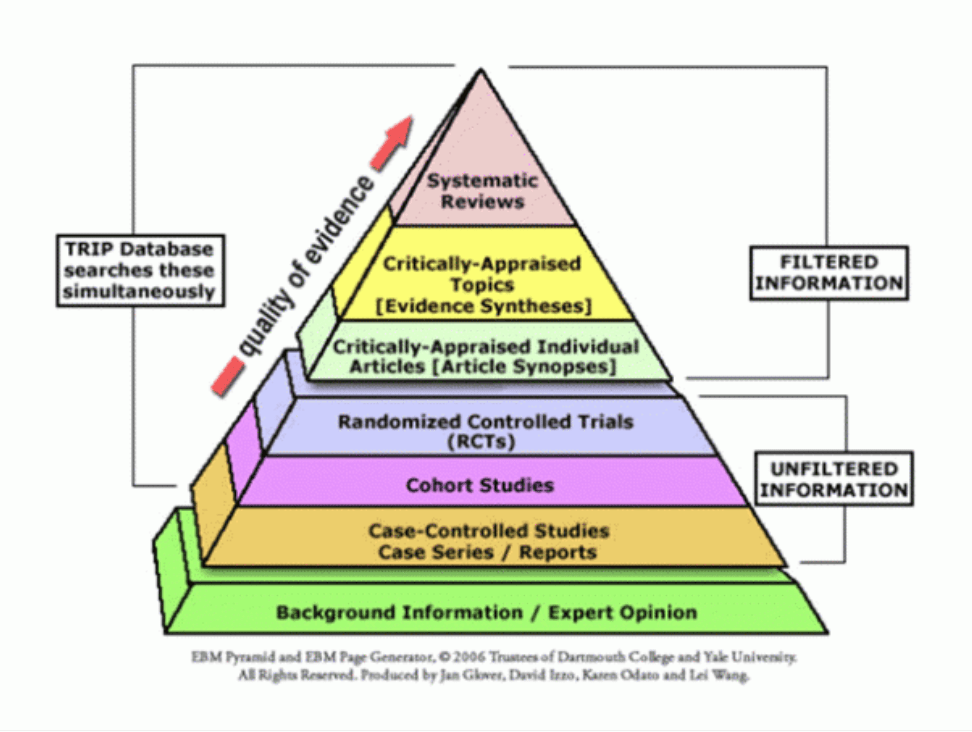
Figure 1
Physiotherapists are now taught, to work as a cohesive multidisciplinary team (figure 2), with physicians, nurses and other health care professionals with the patient, and his individual presentation at the centre of it all.
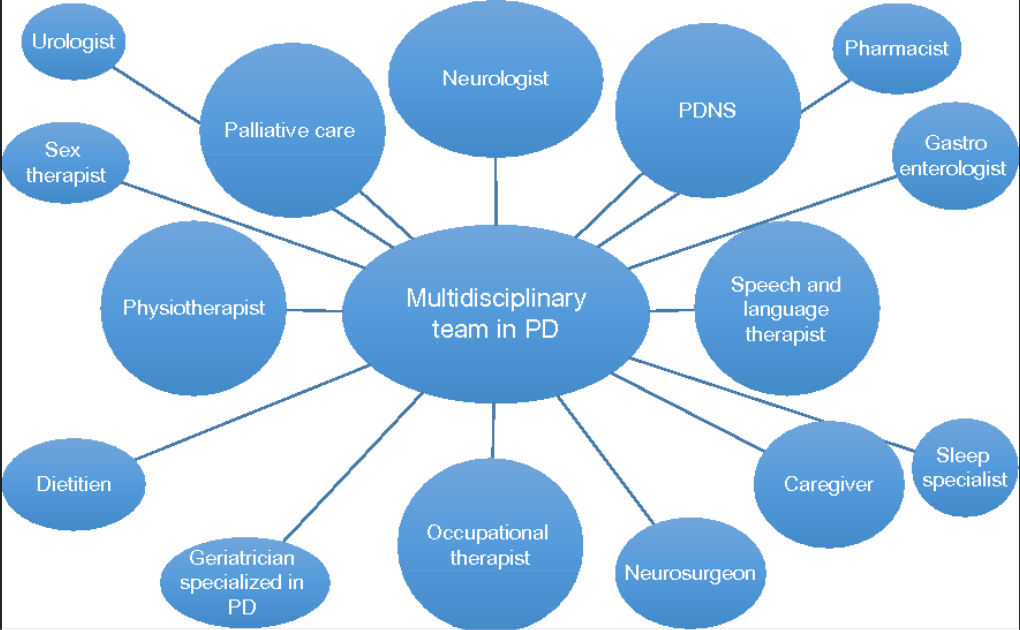
Figure 2
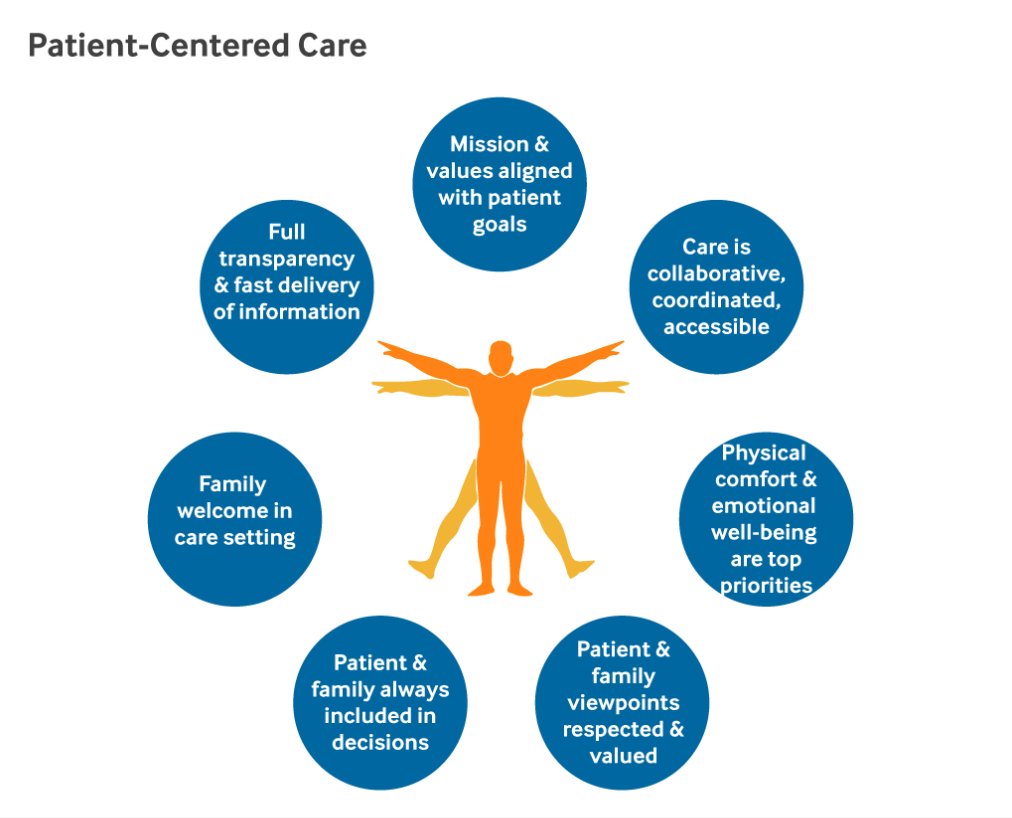
Figure 3
Evidence based research is introduced at undergraduate level in the UK syllabus. Research Methods play an important role in the modern-day physiotherapy syllabi. At Post graduate levels students present their own research in a topic that interests them. In the 21st century, with an abundance of information, it is also important to understand that the English language, is the language of the academia. The inability to communicate efficiently in this language, allows for marketeers, gurus and also organisations to promote various low efficacy modalities, as efficacious treatment modalities, which actually have very little efficacy in the literature, if at all, with some extremely low-quality studies.
Without succinct training in Evidence based practise, we unfortunately end up with organisations in Cyprus like that of PAP (Pancyprian Association of physical therapists), that are promoting seminars in pseudoscientific modalities like Bowen. Bowen himself, has no formal medical training, and succinctly described his approach as a “gift from god”. He died as an unlicensed practitioner and did not even qualify as an osteopath (Which also is not part of allied evidence-based health care professionals).
“In 2015 the Australian Government’s Department of Health published the results of a review of alternative therapies that sought to determine if any were suitable for being covered by health insurance; Bowen Technique was one of 17 therapies evaluated for which no clear evidence of effectiveness was found (AO, 2015).”
And yet even in 2022 the Cyprus Association of Physical therapists is promoting quackery and pseudoscience. Indeed, in last trimester a Bowen seminar and a needling seminar, were the only promoted seminars for physiotherapists presented and made available.

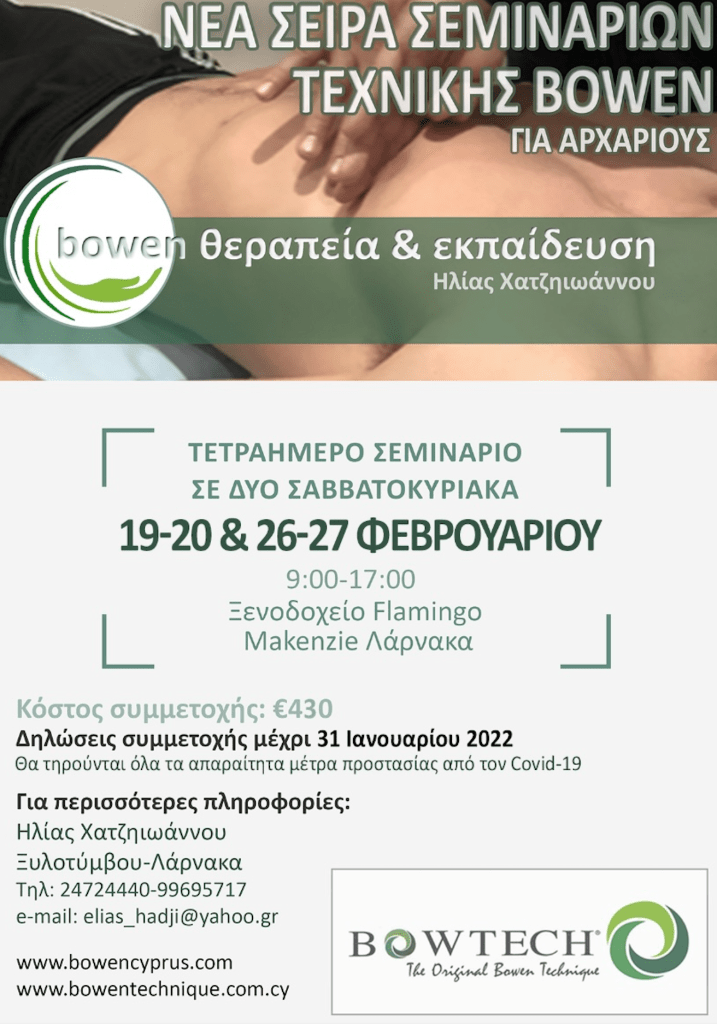
The problem in Cyprus however is that often many leading Physical Therapists are not practising Evidence based physical therapy. Many are still following pseudoscientific modalities, based on marketing, and the ability of such organisations to release translated procurements of information to health care professionals only speaking Greek. It is a tragedy that an association that is meant to be part of an evidence-based profession, part of the allied Interdisciplinary team has no regard for evidence-based practise.
This is why foreign memberships like the UK’s HCPC and CSP are of importance. Unfortunately, the PAP (Pancyprian Association of Physical Therapists) needs to do a better job in promoting evidence-based practise.
AO, C. B. 2015. Review of the Australian Government Rebate on Natural Therapies for Private Health Insurance.
CSP. 3 August 2020. CSP History- Founded by four nurses in 1894, the CSP was awarded its Royal Charter in 1920 and has become the profession’s leading membership organisation in the UK. [Online]. [Accessed 21 February 2022].
SHARMA, K. N. 2012. Exploration of the History of Physiotherapy. Scientific Research Journal of India, 1, 19-22.
 Biokinetic - Physical Rehabilitation Home and business Services - Nicosia Cyprus - HCPC - CSP - GESY